
Have you ever heard of Maslow’s Hierarchy of Needs? Maslow posited that people were motivated to achieve certain needs and that these needs are divided into 5 stages of ‘basic’ and ‘growth’ needs. It boils down to the idea that the needs on the lower level (i.e. physiological needs like food, water, etc.) must be met before you can move up to the different levels of safety, social, esteem, and self-actualization needs[1].
If you think about it, the history of lighting is very similar to Maslow’s hierarchy. When lighting was first introduced, we needed it for survival and over time it has moved up to the ‘needs’ levels to almost self-actualization. For example, now we want light to be more intuitive with dimming function, and pre-empting our comings and goings. It’s almost similar to self-learning or an AI component.
Light is in EVERY aspect of our lives. First, we changed our environment by lighting up the world around us. Now, we are looking to reduce our impact on the environment as technology advances and we understand more how it affects our environment.
We need to know where we came from to appreciate where we are going. This article dives into the history of light, and our relationship to it.
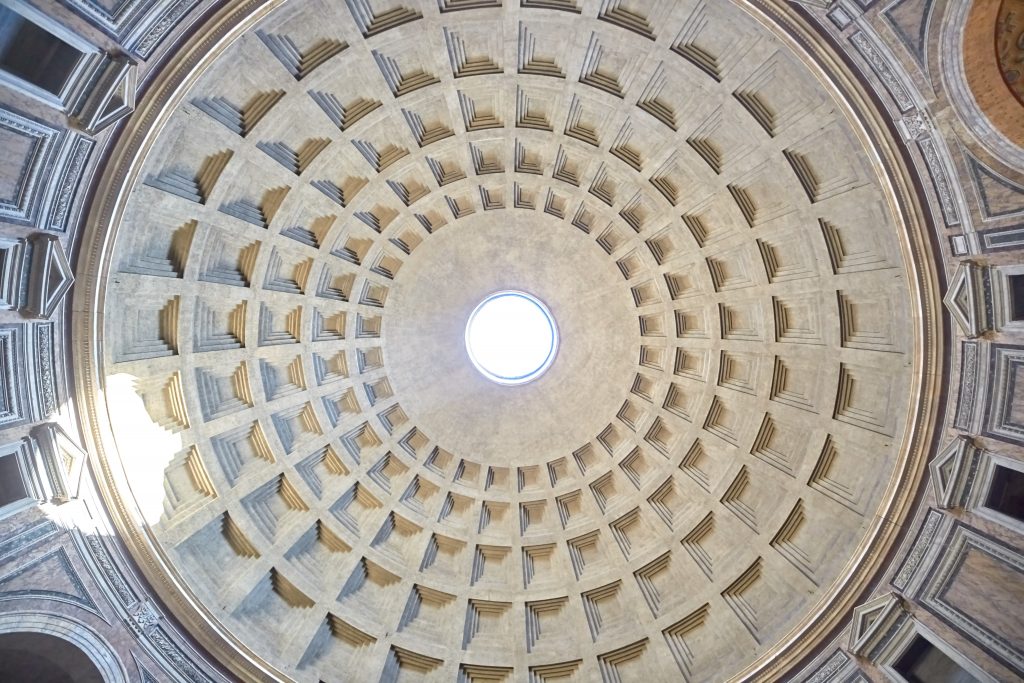
Daylight & Fire
The earliest lighting we had was daylight. Ancient humans and temples with specific features to either let light in or amplify it. A great example of this is the famous Pantheon in Rome, with the oculus in the center of its domed ceiling to let in natural light.
The first non-daylight light source that humans used was fire. As evidenced by cave paintings done by early humans that have been found far out of the reach of sunlight, humans have long used fire to illuminate interiors. From torches, we moved to candles, oil lamps, and gas-lighting. As humans came up with more effective ways to disperse light, we were able to create a world where our days were ‘longer’ because we longer had to rely on sunlight to illuminate the world around us.
Edison & The 1800s
As we all learned in elementary school, Thomas Edison created what is essentially the modern incandescent lightbulb in the late 1800s. While his was not the first incandescent bulb to be invented, he improved on the design patented by Henry Woodward and Matthew Evan. The incandescent bulb and the lighting options it provided gave people the ability to live life and go about doing things that under previous circumstances (and technologies) they would not have been able to do.
In addition to updating the bulb technology, Edison also invented the technology that made the use of light bulbs practical:
What makes Edison’s contribution to electric lighting so extraordinary is that he didn’t stop with improving the bulb – he developed a whole suite of inventions that made the use of light bulbs practical. Edison modeled his lighting technology on the exisiting gas lightning system. In 1882 with the Holborn Viaduct in London, he demonstrated that electricity could be distributed from a centrally located generator through a series of wires and tubes (also called conduits) [2].
Fluorescents
Though Edison and his partners experimented with the next stage of lighting’s evolution, it was Edmond Germer that was able to get the first fluorescent lamps patented. However, it wouldn’t be for many years that fluorescents would be widely adopted. One of the main reasons for the mass residential adoption of fluorescents? The 1973 oil crisis.
Though the technology for incandescent and fluorescent bulbs had been upgraded over the years to be better and more efficient, it hadn’t been until recently in our history that an alternative technology came into widespread use. That technology is the light-emitting diode – LED for short.
LEDs
The first successful LED was created by and employee of General Electric; Mr. Nick Holonyak Jr. in 2961. It wouldn’t be until 2008 that the 60 watt LED bulb we commonly use today would be introduced by Phillips. Since that bulb was introduced, the US Department of Energy states that the cost of LED bulbs has decreased by 85%, and that today’s bulbs are six to seven times more energy-efficient than their predecessor, the incandescent bulb.
What’s the next step in our relationship with lighting?
We are beginning to evaluate how much lighting costs us in more than just a monetary way. We calculate what our environmental footprint is and work to ensure that no lighting is wasted, and we’re constantly seeking new ways to cut down on power consumption and energy cost. And, as the history of lighting has shown us, the technology is adapting to accommodate these ‘wants’. For example, organic LEDs – a flat light emitting technology which places a series of organic films between two conductors.
We are also at the point where we are beginning to deepen our scientific understanding of how lighting affects our health (for more information on this research check out the Illuminating Engineering Society). In addition, like many things, what’s old is becoming new again with the resurgence of optimizing building and structure design for the best integration of natural light (aka our earliest light source, daylight). This is known as daylight harvesting.
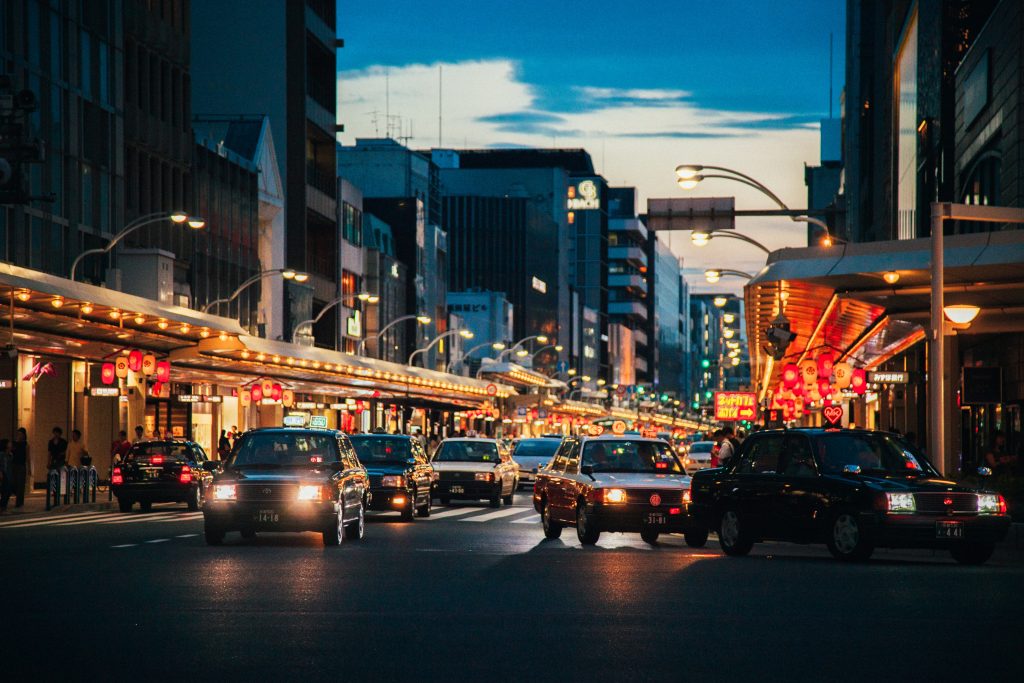
So what does the history of lighting technology teach us about our relationship with light?
Lighting has become increasingly more important in our lives. While lights used to just illuminate a room, now they have specific purposes and tasks they are supposed to do for us (i.e. Seasonal-Affective-Disorder [SAD] lights). It’s similar to how cars are getting more and more technical – we increasingly want our lights to cater to our needs. We demand that technology changes to accommodate us, and often engineers, experimenters, and technologists rise up meet that demand.
If you have any comments, questions, or ideas about the history of lighting? Don’t hesitate to reach out – we’d love to answer!
[1] SimplePsychology.org, Maslow’s Hierarchy of Needs
[2] energy.gov, The History of the Light Bulb
Other references: www.historyoflighting.net, inventors.about.com (History of Lighting and Lamps), Wikipedia.org (Timeline of Lighting Technology)
Recent Comments